

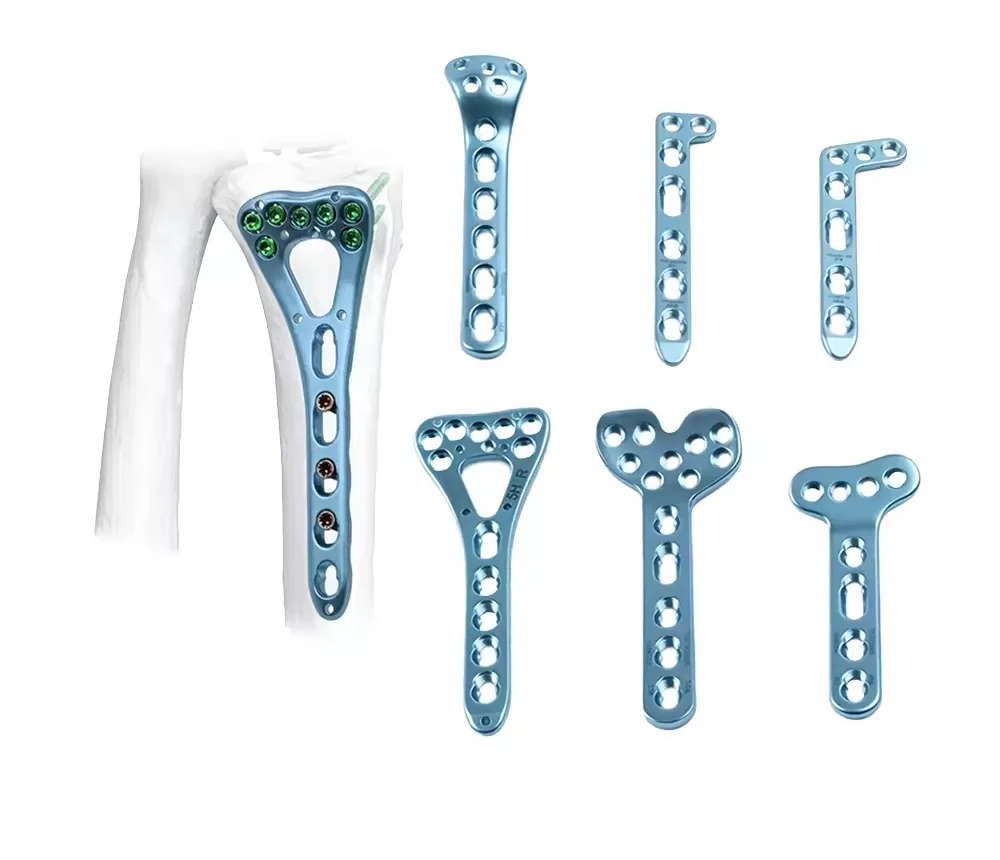
Compare an orthopedic locking plate system by plate fit, screw compatibility, instruments, traceability and supply terms. A practical guide for implant buyers.
What is an orthopedic locking plate system?
An orthopedic locking plate system combines plates, compatible locking screws and the instruments specified for their use. Buy the system, not just the metal. A low plate price tells you little if the matching driver, drill guide or screw length is missing from the tray. In a locking construct, the screw head engages the plate; this differs from a conventional screw that draws the plate toward the bone. The AO Surgery Reference explains this distinction in its guide to locking head and variable-angle screws. For buyers, the practical question is whether every required component is identified and supported by the supplier. Start with a written component list. Then assess the intended applications, size range, instrument requirements, documentation and replacement terms as one purchasing decision. A catalogue photograph cannot answer those questions on its own.
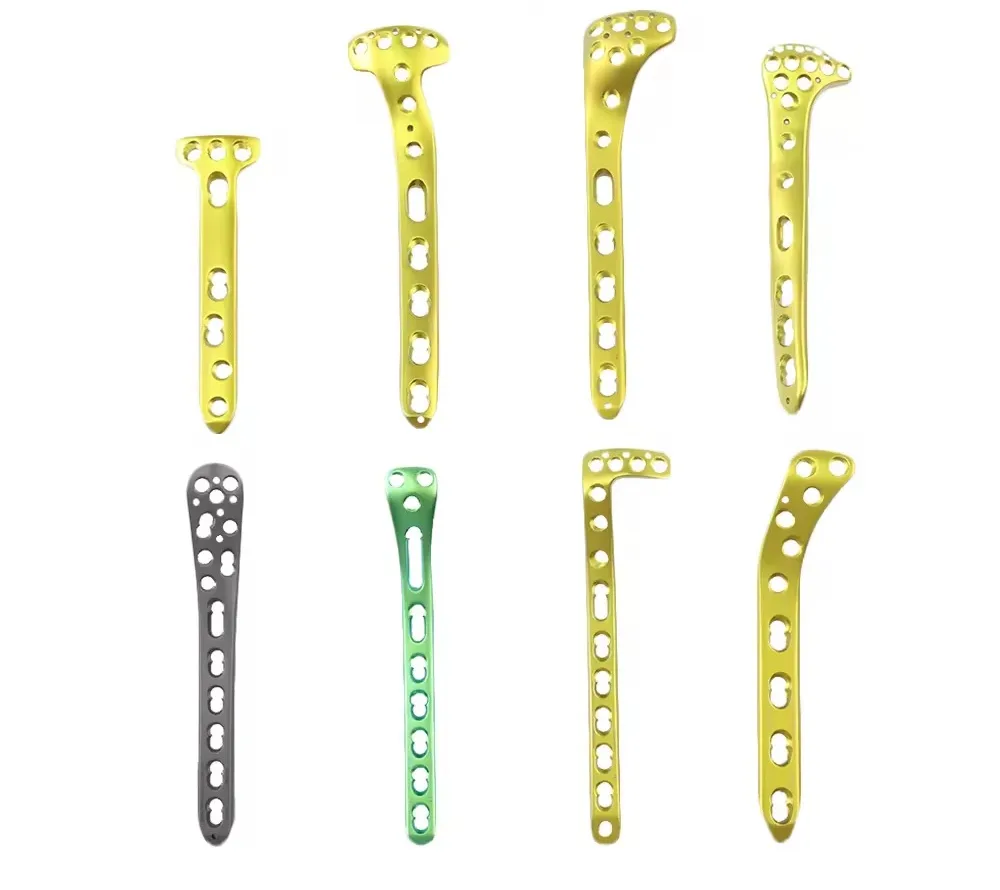
Locking plate designs shown for comparison. Confirm the model, dimensions and compatible components for the intended application.
Choose plate families around actual demand
Start with the anatomical regions your customers serve. A distributor supplying hand surgery has a different stock plan from one supporting lower-limb trauma. For an orthopedic locking plate system, record plate length, hole count, left or right designation where relevant, and the screw options approved for each model. Do not let a large catalogue replace that exercise. Ask clinical users which sizes they need most, then separate core inventory from items ordered for specific cases. The Youbest locking plate range provides a starting point for reviewing mini, distal radius, upper- and lower-limb, and ankle plate categories. Anatomical fit is model-specific; a family name does not establish suitability for every patient. Request dimensioned specifications and the applicable instructions for use. Put the agreed model codes into the purchase order so a broad description cannot quietly become a substitute product at dispatch.
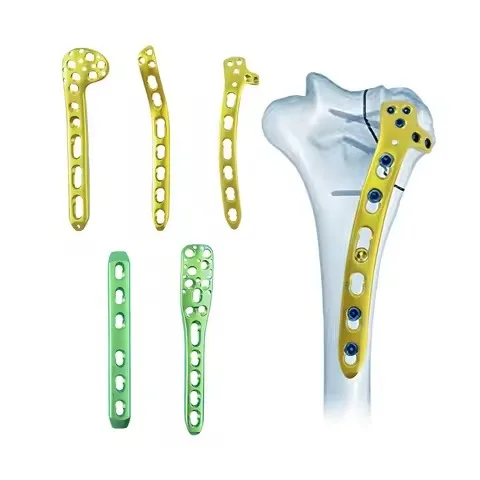
Proximal humerus plate examples and an anatomical illustration. Plate shape and screw configuration vary by model.
Match screw interfaces, not just diameters
Two screws marked with the same diameter are not automatically interchangeable. Head geometry, locking thread, drive recess and the plate interface all matter. When reviewing an orthopedic locking plate system, ask the supplier to map each plate code to its permitted screw codes and lengths. Distinguish locking screws from conventional cortical screws and record which holes accept which components. Where a variable-angle option is offered, obtain its documented limits and dedicated instruments; do not infer these from a product image. Compatibility needs written evidence, especially when a hospital already owns trays from another manufacturer. A sample that appears to fit is not proof of a validated combination. Request confirmation for the exact configuration being quoted. Keep the approved component map with purchasing and receiving records so sales staff, warehouse teams and clinical users work from the same information, rather than different catalogue editions.
Audit the instrument tray before the first order
A tray is useful only when its contents match the selected implants. Ask for an itemized instrument list with part numbers, quantities and the systems each item supports. For an orthopedic locking plate system, review the specified drill bits, guides, depth gauges, drivers and any required torque-limiting tools. The applicable instructions determine the exact set. Ask how worn tools are identified, replaced and supported, and which cleaning and sterilization instructions accompany reusable items. A polished case is not evidence of a complete kit. Compare the Youbest trauma instrument range with the actual plate and screw codes on your quotation. Include the receiving team's checks in the handover. If an essential instrument is absent, record the gap before dispatch instead of leaving the hospital to discover it when the tray is needed. Spare-part access belongs in the initial discussion.
- Match every required instrument to an identifiable part number.
- Confirm whether cases, inserts and spare drivers are included.
- Document replacement terms and instructions for reusable instruments.
Verify documents at the model and batch level
Treat documentation as part of the product. For an orthopedic locking plate system, ask for the material specification, model identification, batch traceability and supplied condition: sterile or non-sterile. Where sterile products are proposed, review the applicable packaging, shelf-life and sterilization evidence with the responsible specialists. Where they are non-sterile, confirm the instructions and responsibilities before purchase. A quality management certificate alone does not establish that every listed device can be sold in your market. Check the scope, the named manufacturer, the covered models and the documents required by your destination. Ask who will resolve discrepancies and how changes to products or labels are communicated. Avoid collecting a folder of unrelated certificates simply because it looks impressive. The useful evidence connects the quoted device to the delivered batch and to the requirements your importing and hospital teams must actually meet.
Compare the cost of a usable system
Unit price is only one line in the buying decision. An orthopedic locking plate system also creates costs for trays, spare instruments, freight, stock holding and replenishment. Compare suppliers using the same basket of plate codes, screw lengths and instrument quantities. Otherwise, the cheaper quotation may simply contain less. Ask for lead times by item, not one headline promise for the entire range. Agree how partial shipments, back orders and discontinued models will be handled. For distributors, inventory depth matters as much as catalogue breadth: an attractive plate family is difficult to support when common screw lengths cannot be replenished. Build an initial order around verified local demand, then review usage before expanding. Include replacement tools and slow-moving sizes in the cost review. A credible budget shows what it takes to keep the agreed system available, not just what it costs to buy the first box.
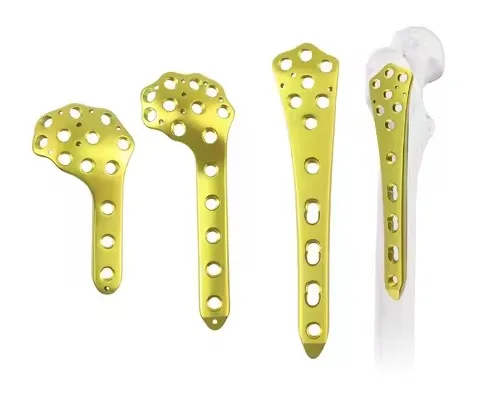
Distal femur plate examples. Verify side, length, hole count and the approved screw and instrument combination.
Send a complete RFQ, then evaluate the response
A useful request for quotation makes assumptions visible. State your role, destination market, intended product categories, preferred models and estimated quantities. Attach the component list and ask the supplier to identify exclusions rather than silently filling gaps. When comparing an orthopedic locking plate system, review the response with purchasing, regulatory and clinical stakeholders as appropriate. An approved sample is a reference, not a substitute for the documentation and checks required for the final supply. Agree what will be inspected at receipt and how a mismatch will be addressed. Distributors and hospital buyers can use the checklist below to turn a general inquiry into a clear specification. Start with the plate family and the market you serve. Then resolve the screws, tools, documents and supply terms before committing to a broader range. The strongest offer is the one your team can verify, support and reorder with confidence.
- Destination country and buyer role: distributor, importer or hospital procurement.
- Plate codes, sizes, sides and quantities, with the matching screw matrix.
- Instrument contents, spare parts and reusable-device instructions.
- Required documentation, labeling and sterile or non-sterile supply condition.
- Quoted exclusions, delivery schedule, replenishment terms and acceptance checks.