
An OEM quotation checklist for orthopedic distributors and private-label brands: define the design scope, product specifications, instruments, documents and acceptance criteria before comparing prices.
What should you send before requesting an OEM quote?
Before contacting an orthopedic implants OEM manufacturer, prepare a brief that names the product family, target market, design scope, sizes, materials, matching tools, packaging and order quantities. Add the drawings or model references available, and mark what still needs review. A photograph can start a conversation. It cannot define a production order. A useful quote starts with a shared specification. Without one, two prices may cover different products, records or services. This guide helps distributors, importers and private-label brands turn a broad inquiry into a scope that a supplier can assess. It applies across implant families, with separate requirements for each system. The aim is not to specify every detail alone. It is to show which details are fixed, which need technical input and who will approve the final version.
Define what OEM means for your project
OEM is often used to describe very different requests. One buyer wants an existing model with agreed branding. Another needs a new design made to controlled drawings. A third needs design support as well as production. Name the work before asking for a price. Tell the orthopedic implants OEM manufacturer whether the starting point is an existing catalog item, a buyer-owned design or a concept that still needs development. Identify who owns the design files and who may approve changes. Agree confidentiality and intellectual property terms before exchanging sensitive drawings. Do not send a competitor photograph as an instruction to copy it. A reference is not a manufacturing specification. If design work is required, ask for a feasibility review and a separate development scope. Keep that cost apart from the unit price for routine production.
Specify each product family and size range
A request for a complete orthopedic range is too broad for a useful comparison. Split the inquiry into families, then identify the models and sizes within each group. For plates, list the anatomical location, side, length and hole pattern required. For screws, define the specified diameter, length range, thread and drive features. Nails and other systems need their own model lists. Use the Youbest locking plate range as a starting point for identifying catalog families. Quote the requested range, not an assumed assortment. Ask the orthopedic implants OEM manufacturer to flag missing sizes and proposed alternatives separately. A plate image does not establish dimensions, performance or compatibility. Keep implant and instrument scopes distinct. Add other product families only when the supplier has confirmed their availability and the technical team has reviewed the relevant requirements.
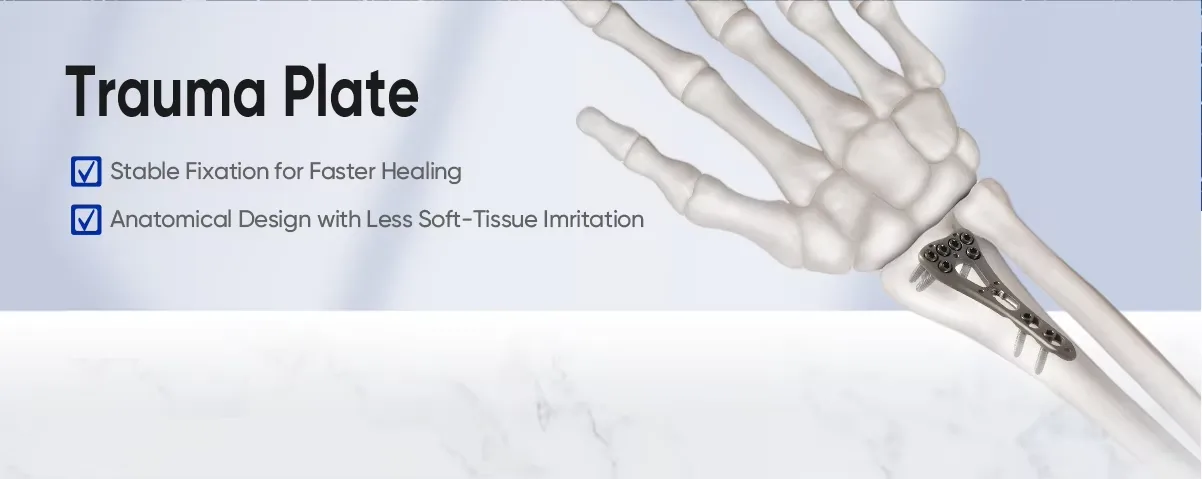
Trauma plate product illustration. Specify each plate model, side and size in the RFQ; this illustration is not a dimensional drawing.
Set materials, drawings and acceptance criteria
Specify the material grade and the applicable requirements agreed by your technical team. Avoid vague descriptions such as premium metal or medical quality. Where drawings exist, include the revision, units, dimensions, tolerances and surface requirements. Mark critical features for review rather than applying an arbitrary tight tolerance to every surface. Define how conformity will be checked. Ask the orthopedic implants OEM manufacturer which inspection records and material records it can provide for the proposed scope. Agree the acceptance criteria before sample production, including who reviews the results and how discrepancies are resolved. Appearance is only one check. A polished sample does not prove that the full specification has been met. If a requirement is unclear, list it as an open item. Changes after sample approval should trigger a documented review of their effect on cost, timing and required evidence.
Match implants with the required instruments
An implant quote can leave a large gap if the matching instruments are assumed rather than listed. Identify the guides, drills, drivers, depth gauges, insertion tools and trays required for each proposed system. Use the Youbest trauma instrument sets to frame the discussion, then request the exact contents for the selected models. Similar size does not establish compatibility. The orthopedic implants OEM manufacturer should identify the intended component combinations and the instructions that support their use. Ask how replacement tools and spare parts will be supplied. Review the whole set before approval. Where tools are reusable, include the relevant processing instructions in the document review. Keep sample evaluation under qualified technical oversight, and do not treat a successful visual fit as proof of clinical suitability. Record any unresolved interface question before committing to the production scope.
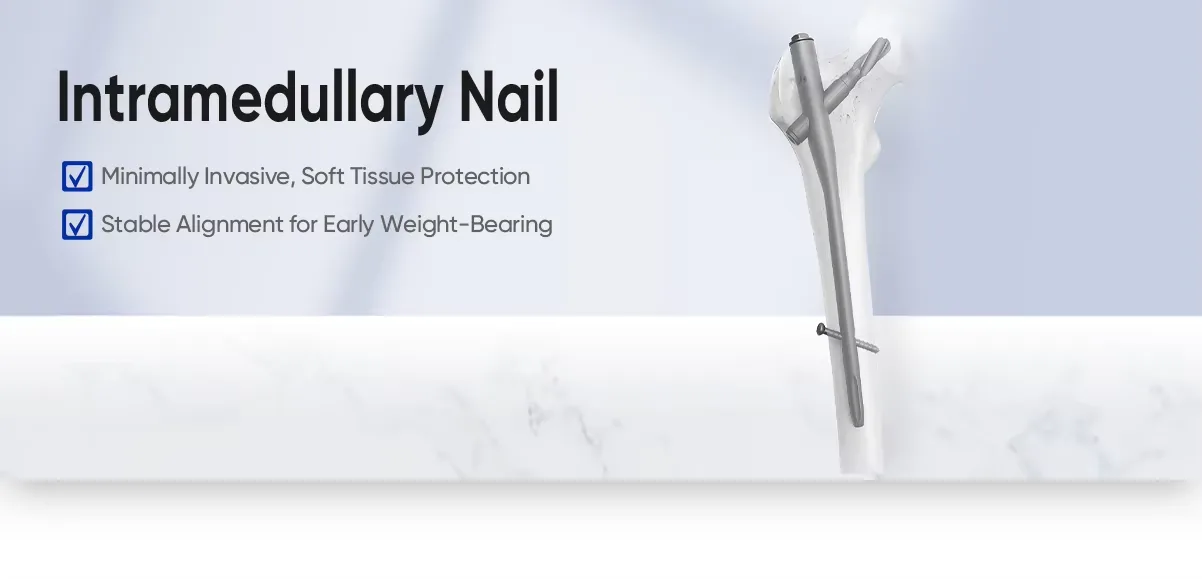
Intramedullary nail product illustration. Confirm the matching guides, insertion tools and locking components for the selected system.
Assign responsibility for labels and documentation
Start with the destination country and the intended supply arrangement. Identify the responsible parties for product documentation, labeling, registration work where applicable, and complaint handling. Have qualified reviewers confirm the requirements for the exact devices and market. ISO 13485 addresses quality management systems for medical devices; a quality-system claim should be checked against its documented scope. Do not treat a logo as a complete file. Ask the orthopedic implants OEM manufacturer which records it can supply and which tasks remain with your organization. State the proposed supply condition, packaging requirements, label languages and marking content. Private labeling needs more than artwork. Agree who approves labels and instructions, how product and lot identifiers are controlled, and what evidence supports any proposed sterile supply. Do not assume that a packaging change is merely cosmetic or already covered by an existing arrangement.
Separate unit price from project costs
Ask for a quotation that separates samples, tooling, development, testing, packaging and routine production. State quantities by model and size, not only an annual total. A forecast is useful for planning, but it is not the same as a confirmed purchase order. Make price assumptions visible. Ask the orthopedic implants OEM manufacturer whether minimum quantities apply to each model, size or order. Define delivery terms, payment milestones, quote validity and the events that start each lead time. Keep the launch calender tied to approved documents and completed reviews rather than an optimistic shipping date. Agree the cost of change. Clarify who owns tooling, where it is held and what happens if a drawing revision makes it unsuitable. Require exclusions to be stated clearly so that a low unit price does not hide essential work outside the quotation.
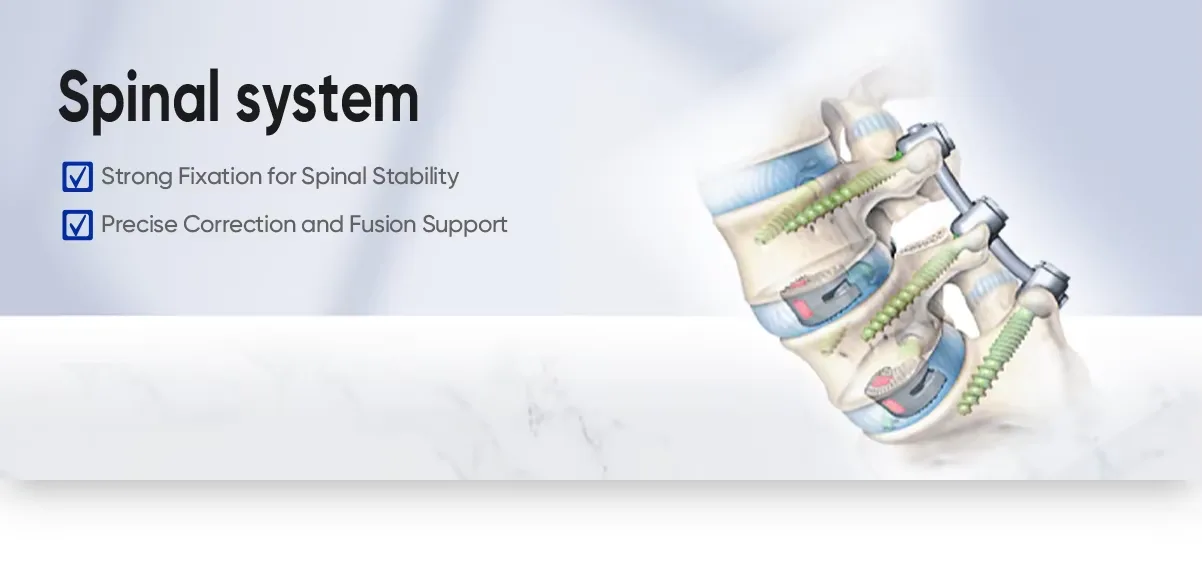
Spinal fixation product illustration. Define the proposed components, instrument requirements and development scope separately when comparing offers.
Approve a pilot before scaling the order
Choose an orthopedic implants OEM manufacturer by its response to a defined brief, not by the speed of its first price reply. Ask the supplier to return a list of assumptions, exclusions and unresolved questions alongside the quote. Use a pilot to test the agreed process. Set the sample and pilot review criteria in advance, then check the products and records against the approved revision. Document discrepancies and close them through the agreed review process. A pilot can test supply and inspection arrangements; it is not, by itself, proof of clinical performance. Scale from approved evidence. For a focused first discussion, share your company role, target country, product families, design status, quantities and launch window. Request confirmation of feasibility before assuming that a catalog product can be modified, relabeled or supplied for every destination market.
- Target country, buyer role and intended product families.
- Catalog model references or controlled drawings with revision numbers.
- Materials, sizes, quantities and technical acceptance criteria.
- Matching instruments, tray contents and spare-part needs.
- Packaging, marking, language and documentation responsibilities.
- Sample scope, tooling ownership, delivery terms and change control.
Product images illustrate existing catalog ranges. They do not confirm custom manufacturing feasibility, model-specific compatibility or market authorization for a proposed OEM project.