

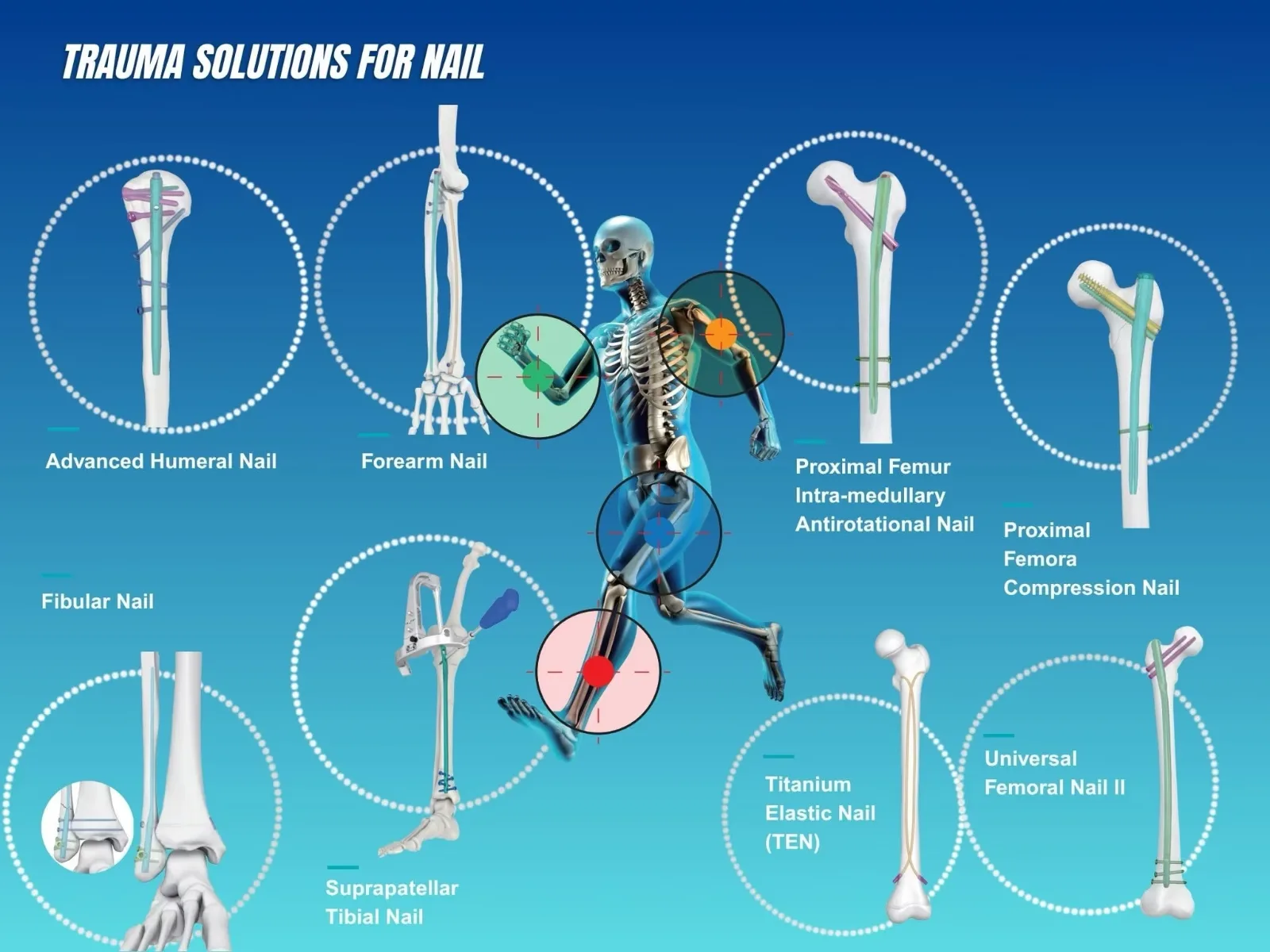
Compare an intramedullary nail system beyond the implant: check screws, instruments, compatibility, traceability and replenishment before placing your order.
What makes an intramedullary nail system complete?
An intramedullary nail system includes the nail, its specified fixation components and the instruments required for that particular design. Buying the nail alone leaves the most important procurement questions unanswered. Which locking screws fit? What connects the implant to its insertion handle? Are the required guides, measuring tools and removal instruments included? A low unit price is meaningless if essential items sit outside the quotation. For distributors and hospital buyers, system completeness should be documented by part number. Start with an itemized list that links each implant model to its approved components and instrument set. Then review dimensions, supplied condition, documentation and replenishment terms together. This creates a practical basis for comparing offers. It also prevents a catalogue image from becoming an assumption about what will actually arrive in the shipment.
Select the nail family before comparing sizes
A femoral nail, a tibial nail and a humeral nail belong to different product families. Do not collapse them into one stock category called “IM nails.” An intramedullary nail system must be reviewed against its intended anatomical application and the manufacturer's instructions. Record the available lengths, diameters, design features and side designation where applicable. Ask clinical users which configurations their service requires, then build the purchasing list around those needs. The Youbest intramedullary nail range provides a starting point for comparing the listed families. A similar name does not establish an equivalent design. Antegrade, retrograde and approach-specific options need their own review. Obtain the relevant specification sheet and technique guide before approving a model. Keep the agreed codes in the order so the supplier cannot interpret a broad product description as permission to substitute another configuration.
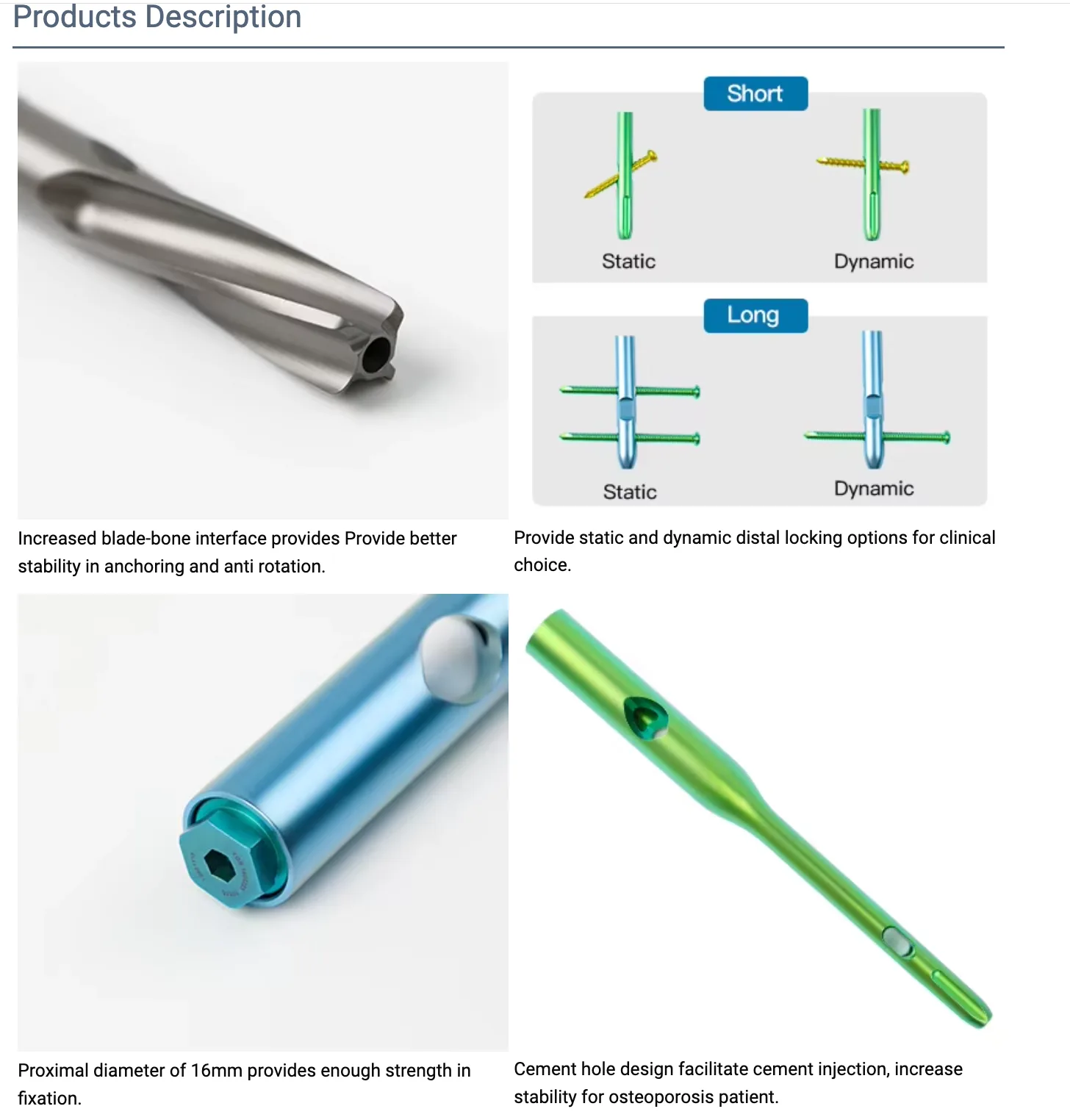
Product-specific design illustration. Dimensions, locking options and performance statements shown apply only to the illustrated design and require confirmation in its technical documentation.
Verify screws, caps and connecting parts as one set
A nail diameter tells you very little about the compatibility of its accessories. Screw geometry, thread interfaces, drive recesses and connection details can differ between systems and generations. When evaluating an intramedullary nail system, request a component matrix that maps each nail code to the permitted screws, end caps and other design-specific parts. For proximal femoral systems, clarify the specified head fixation component rather than assuming that a blade and a screw are interchangeable. Written compatibility confirmation beats visual resemblance. Do not combine brands or versions simply because parts appear to engage during a sample review. Ask the manufacturer to identify the supported combinations and any excluded ones. Include the required length range in the quotation, not just a total screw quantity. This gives receiving staff a clear reference and helps prevent shortages that remain hidden until the full set is checked.
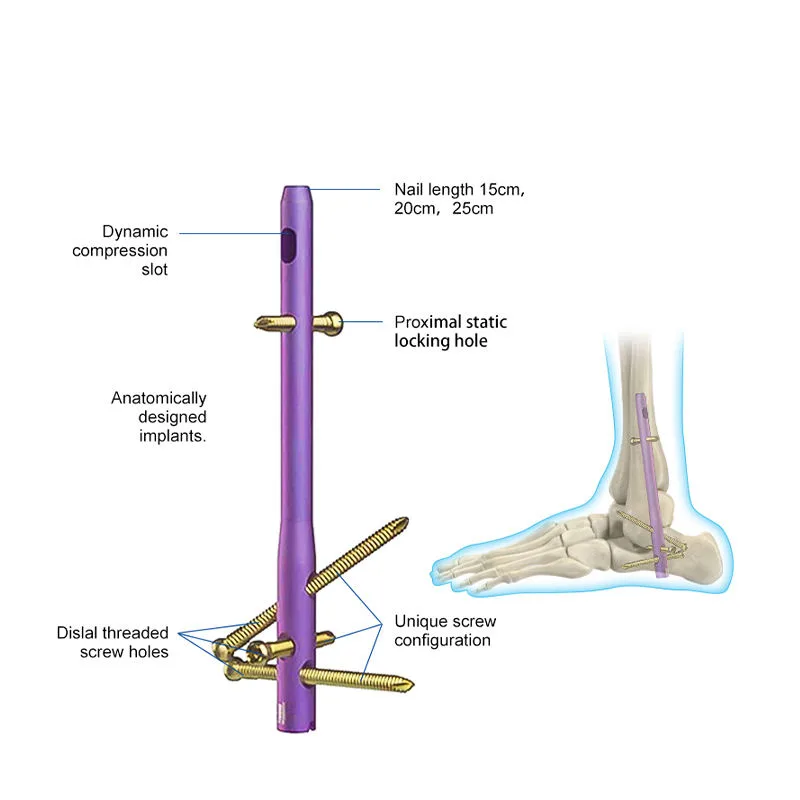
Illustrated nail and screw configuration. Confirm the intended application, lengths and compatible components for the exact model.
Check the instruments against the exact nail model
The instrument tray deserves the same scrutiny as the implant. The AO Surgery Reference notes that instrumentation and technical details vary among nail systems in its overview of infrapatellar intramedullary nailing. For a buyer, this means a familiar-looking tray is not enough. Obtain the list of insertion handles, connecting bolts, aiming devices, drill sleeves, measuring tools and drivers specified for the intramedullary nail system being purchased. Review guide wires, reaming equipment and removal tools where required by that design. Ask which items are reusable, how their condition is assessed and what replacement support is available. Our trauma instrument range can support the initial discussion; the final configuration must be confirmed for the selected nail. Approve a matched inventory, with quantities and part numbers, rather than a photograph labeled “complete set.”
- Confirm the instrument version and its supported implant codes.
- Identify required items excluded from the tray price.
- Obtain reusable-instrument processing instructions and replacement terms.
- Ask how removal and revision instrument availability is supported.
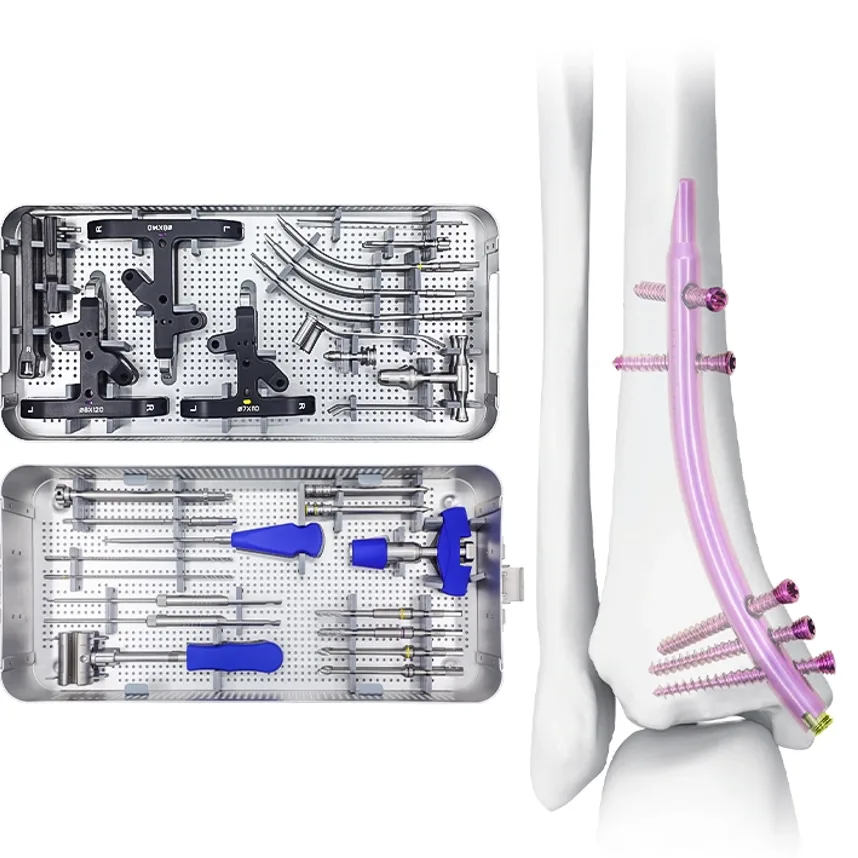
Product and instrument tray example. Verify the itemized inventory and compatibility; the image does not establish interchangeability with other systems.
Review traceability and supplied condition before price approval
A useful quotation should identify what is being supplied and which documents will accompany it. For an intramedullary nail system, check the material specification, model codes, batch identification and sterile or non-sterile condition. If sterile supply is proposed, review the applicable packaging, shelf-life and sterilization evidence with the responsible specialists. For reusable instruments, obtain the manufacturer's processing instructions and any stated use or inspection limits. A company certificate is not a substitute for product-specific evidence. Confirm the scope and validity of documents relevant to your destination market, rather than relying on a logo printed in a brochure. Agree how damaged packaging, missing components or label discrepancies will be handled. Keep these requirements in the purchasing record. They provide a much stronger basis for acceptance than an informal assurance that everything is standard or that the paperwork can follow later.
Compare replenishment costs, then send a focused RFQ
An intramedullary nail system creates continuing inventory needs, so compare more than the first shipment. Ask for lead times by item, minimum order quantities, spare instrument prices and the policy for discontinued models. Separate stocked components from those that require production. A broad catalogue offers limited value if essential screw lengths or connecting parts are difficult to replace. Compare the same basket of goods across suppliers: identical model requirements, size coverage, instrument quantities and documentation scope. Then build a pilot order around verified demand and review the receiving results before expanding. For distributors, importers and hospital procurement teams, the strongest inquiry states the market, product family, quantities and timing clearly. Use the checklist below to make the next discussion concrete. A dependable supply plan begins with a complete specification and written agreement on what the supplier will deliver and support.
- Destination country and buyer role.
- Nail family, model codes, lengths, diameters and required quantities.
- Matching fixation components and instruments, with exclusions identified.
- Required documentation, labeling and supply condition.
- Target delivery date, replenishment needs and acceptance criteria.