

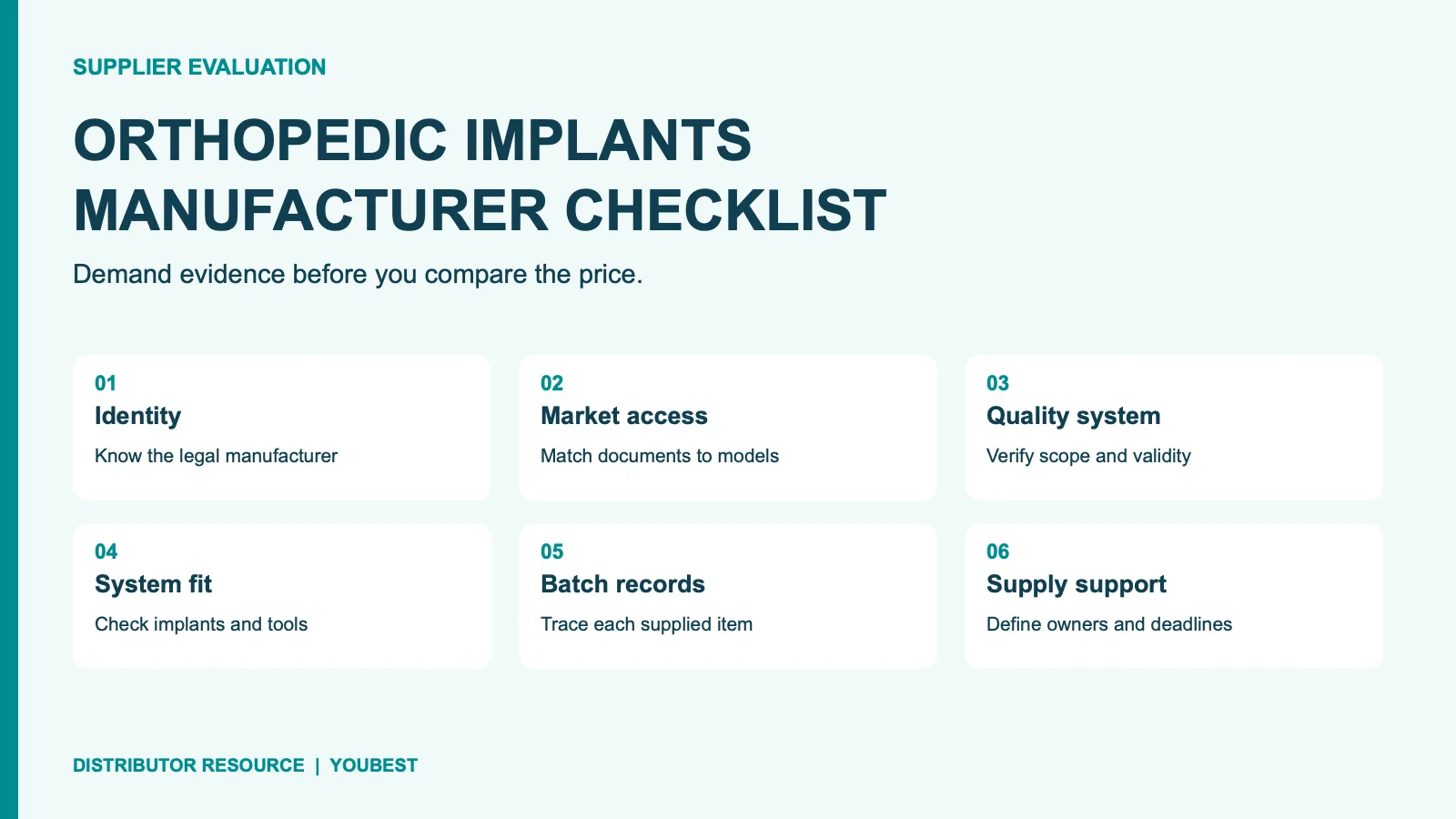
A practical distributor checklist for checking manufacturer identity, product documents, system fit, traceability and supply support before a trial order.
What should distributors check before choosing a manufacturer?
Evaluate an orthopedic implants manufacturer with six checks: company identity, market access, quality records, system fit, batch traceability and supply support. Ask for proof tied to the exact products you plan to buy. A low price means little when a missing driver delays a set or a label cannot be traced to its batch. Start with your market, product codes, expected order size and required files. Then give every supplier the same brief. This makes their replies easier to compare and shows gaps early. A useful supplier review ends with a clear choice: start a defined trial order, hold until named gaps are closed, or decline. The goal is simple. Choose a partner whose claims you can check, whose products you can trace and whose team accepts clear duties after the shipment leaves.
1. Who actually makes the products you will receive?
Start with the name on the label. Ask the supplier to name the legal manufacturer, the factory site and the company that will invoice your order. These may be different firms. That alone is not a reason to reject a supplier, but the roles must be clear. An orthopedic implants manufacturer should explain which work it does and which steps are handled by outside partners. Ask for a current firm profile, site details and a named quality contact. Where possible, plan a site visit or a focused live review of the process for your products. A polished factory video does not prove who made your chosen product. Compare names and addresses across the quote, labels and quality files. Clear up mismatches before you pay. If a seller cannot explain who is responsible in plain language, do not let a discount close the discussion.
2. Do the files cover your exact products and market?
Check market access at the product level. Ask for the files that apply to the models, stated uses and country in your brief, then have your local regulatory team review them. Company paperwork alone does not establish product market access. Ask which exact device models a document covers, who issued it and whether it is still valid. Do not assume that a file for one product range covers every item in the catalog. An orthopedic implants manufacturer should give clear sources for claims made in its quote. Compare model lists, legal names and file status; ask for details where the scope is unclear. Check with the issuing body or an official database where possible. Keep a record of what was checked, who reviewed it and which items still need proof. Close those gaps before placing an order.
3. Can the quality system trace a shipment back to its records?
Treat quality assurance as a working process. ISO 13485 sets requirements for a medical device quality management system; it is not a blanket endorsement of every item in a catalog. Read the official ISO 13485 overview, then check the supplier's certificate scope, site, status and issuing body. Ask how the orthopedic implants manufacturer links a supplied item to its batch and release records. Ask for an example with private details removed. Review how the team handles a complaint, tracks a product change and finds the stock it affects. A lot number must lead somewhere. The value lies in the records behind it. Agree who will answer a traceability request and how the facts will reach your team. Keep this review tied to the products you intend to stock, instead of broad claims about the whole firm.
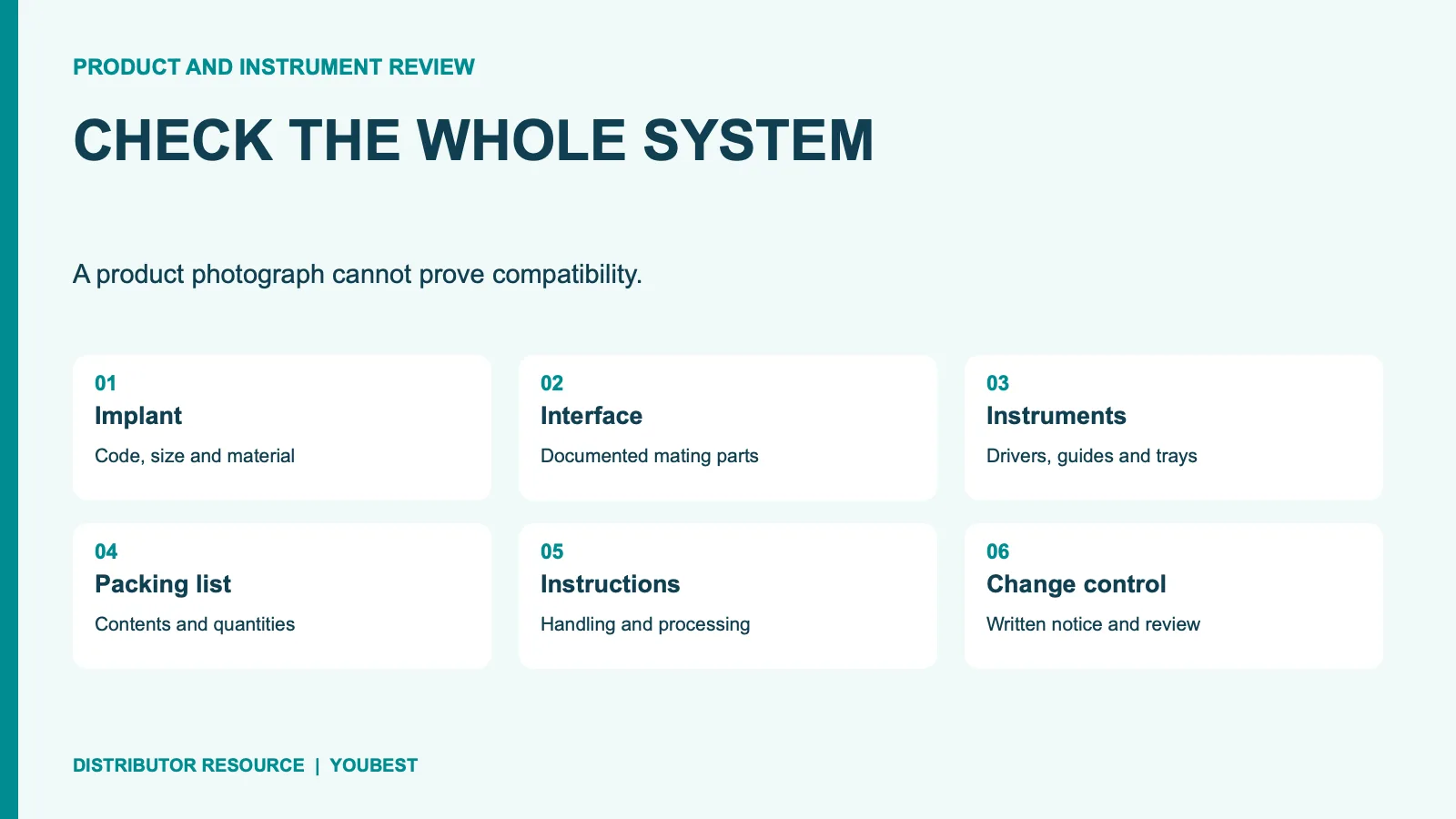
4. Do the implants and instruments form a documented system?
Buy a complete, defined system. A plate, screw and driver that look alike may still differ in their fit or stated use. Parts that look alike are not proven to fit. Ask the orthopedic implants manufacturer for the exact product codes, sizes, materials and documented mating parts. For a trauma set, compare the implant list with the drivers, drill guides, depth gauges and trays specified for it. For a spinal set, check the same level of detail across screws, rods and instruments. Review the trauma portfolio or spinal systems to start, then request a model-specific list. Do not treat a category page as proof of cross-brand fit. Freeze the agreed packing list before the trial order. Record any changed items in writing and review their impact before you accept them. A missing small part can make a full set hard to use.
5. What can a sample review prove—and what can it not?
Use samples to check agreed purchase needs. They can help your team inspect labeling, finish, dimensions against supplied specifications, and set contents. A sample review does not prove how a device will perform in patients or replace the testing and market rules that apply to a device. Define the review method before the samples arrive. Ask the orthopedic implants manufacturer to name the supplied codes, batch details and any differences from the proposed order. Have trained staff check the items within the intended review scope and follow the supplied instructions. Record the findings with clear photos and a short issue log. Do not accept a vague promise to fix everything later. Each gap needs an owner and a closure date. Where a sample passes, retain the agreed specification and acceptance record so the next shipment can be checked against the same basis.
6. What does the quoted price leave out?
Compare the cost of a usable supply plan, not just the price of one implant. Ask what is included in the instrument set, which parts need separate orders and how spare parts are priced. Confirm the packaging and sterile or non-sterile supply state for each item, along with the right handling and processing instructions. Put lead time, minimum order size and payment terms in writing. An orthopedic implants manufacturer should also state when the lead time starts and how it will handle shortages. Discuss labels, freight terms, help with files and change notices before placing the order. Build a follow-up calender for open issues and stock needs. Fast replies before payment are not a service plan. Name the contact who will handle missing items, complaints and repeat orders, and agree how each issue will be tracked to closure.
7. What belongs in the distributor's checklist?
Keep one review file for each supplier and use the same headings across all bids. Mark each item as verified, pending or not applicable, with a reason and a link to the source record. This prevents a long email thread from becoming your only source of truth. Start with the checklist below and adapt it to your products and local rules. It helps structure a purchase; your regulatory team must still assess market access. Ask the orthopedic implants manufacturer to close gaps with clear proof, instead of adding more brochures. Do not average away a missing required document because the price or packaging scored well. A key unmet need should hold the order. Price and service matter only after the basic needs are met. Review the file again when a site, product, label, process or supply plan changes.
- Identity: legal manufacturer, factory site and contracting company.
- Market access: model-specific files reviewed for the destination market.
- Quality: certificate scope, batch records and complaint contacts.
- System fit: implant codes, instruments and approved packing list.
- Sample review: agreed checks, findings and closed issues.
- Supply terms: volumes, lead times, spare parts and change notices.
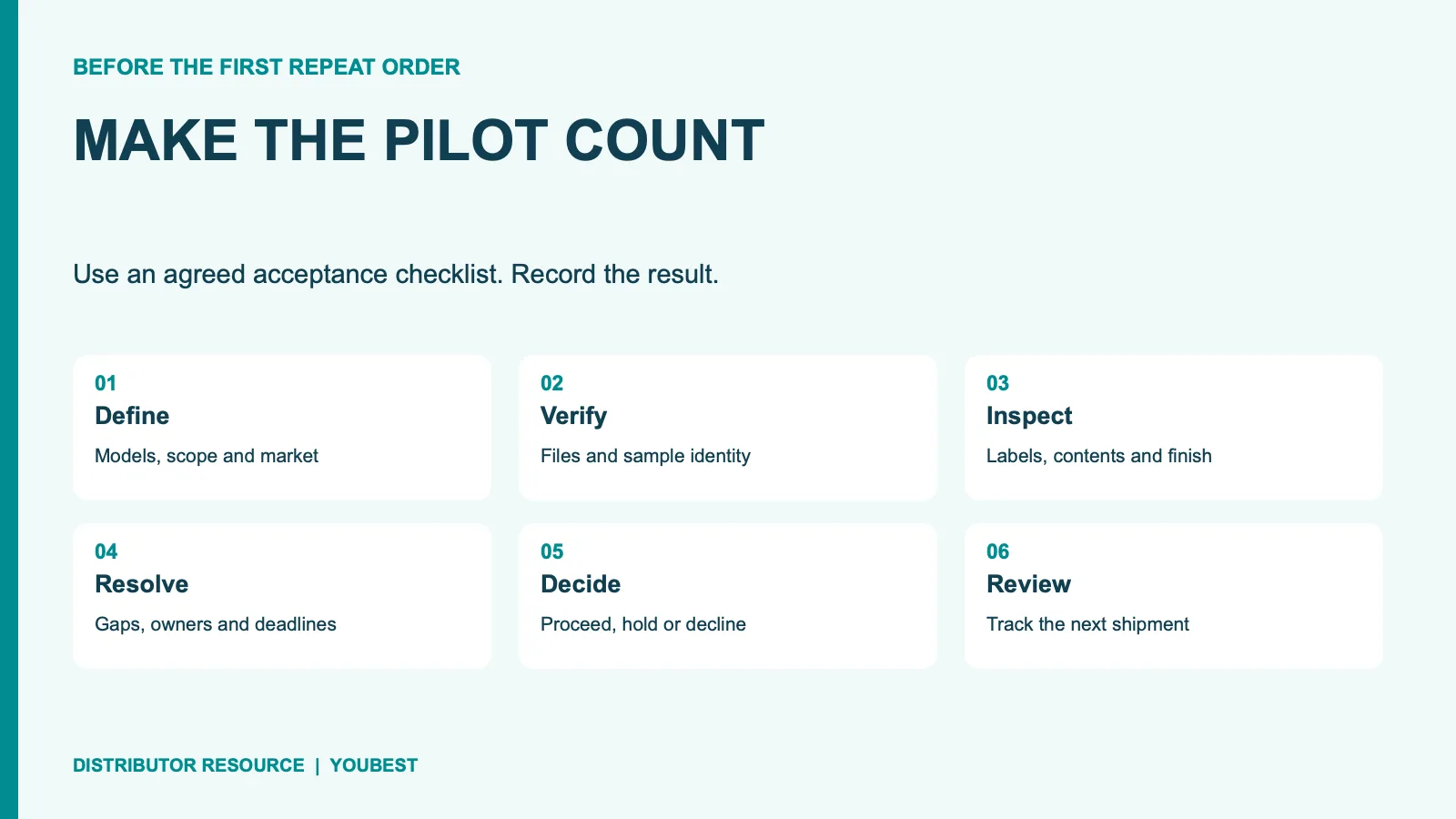
Make the first order a test of the relationship
The strongest choice is the supplier that turns claims into records and follows through when a problem appears. Start with a small trial order after the required checks are done. Keep its scope clear: chosen models, agreed volumes, named files and a written review process. Review the shipment against that brief and log any gaps before adding more products. When evaluating an orthopedic implants manufacturer, ask whether the next order will be as clear as the first. Can your team reorder by code? Can it get a missing item traced? Will changes be disclosed before shipment? Choose service you can count on over a smooth sales pitch. To begin a focused discussion with the Youbest team, send your target market, product list, volumes and instrument needs. This brief supports a focused review of files and product details, instead of another generic catalog exchange.