

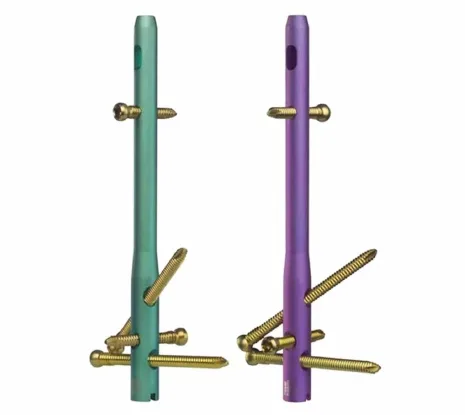
Explore ankle and hindfoot fusion nail features, locking screws, size options and instrument needs. Watch the product video and discuss your order with Youbest.
Ankle and hindfoot fusion nail: what the system is designed to do
An ankle and hindfoot fusion nail is an intramedullary implant used to stabilize the tibia, talus and calcaneus during selected fusion procedures. This is often called tibiotalocalcaneal, or TTC, arthrodesis. The nail and its locking screws form a fixation construct while the prepared joints heal. For a distributor or hospital buyer, the product deserves attention as a complete system: nail, screws, end cap and compatible instruments. A photograph of the main implant tells only part of the story. The useful question is what comes with it. The designs shown here include proximal locking options and crossing distal screw positions. These features give purchasing teams concrete points to review with their clinical users. Start with the intended application, then compare the exact configuration against the surgeon’s requirements and the model-specific instructions for use.
Watch the product video before discussing your configuration
Use the video below as a starting point for your product review. It introduces the ankle and hindfoot fusion nail visually, helping buyers put the implant’s shape and components into context before requesting a quotation. Share it with the surgeon or technical team involved in selecting the system, then record the questions that remain. Which nail length is required? What screw range should be stocked? Which targeting and insertion instruments belong in the set? A visual review should lead to a written specification. Images and demonstrations can help explain a system, but the final purchase must identify the actual model and compatible parts. This is especially useful for importers building a new foot and ankle portfolio, where the first order needs to support both product evaluation and a practical plan for future replenishment.
Watch: Ankle and Hindfoot Fusion Nail 3 — product video from Freeman Shi.
Static and dynamic locking options deserve a closer look
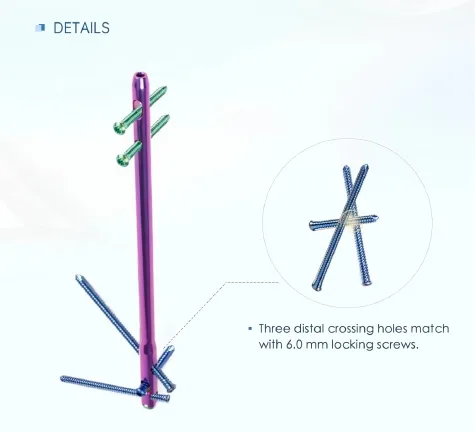
The illustrated designs show static and dynamic proximal locking holes, together with distal screw positions that cross in different directions. The supplied product details identify 5.0 mm screws for the proximal locking positions and 6.0 mm screws for the three distal crossing holes in the described configuration. That distinction matters when preparing an order. Screw diameter, length, driver interface and hole compatibility need to be checked together. An ankle and hindfoot fusion nail should therefore be quoted with a model-specific component list, rather than a generic bag of screws. Static and dynamic locking describe different mechanical options; the surgeon chooses the appropriate configuration under the device instructions. For buyers, the practical advantage is a clearly defined set of choices. Ask for a labeled component diagram and confirm every required screw size before the order is approved.
Nail sizes and end caps: build the right stock mix
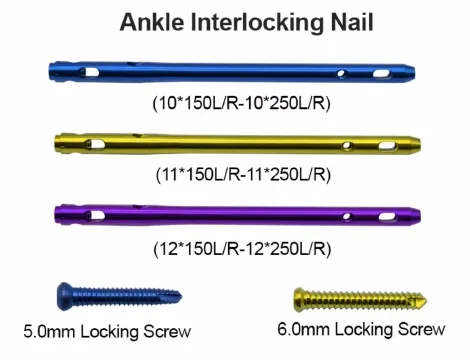
The reference specification lists 10, 11 and 12 mm nail diameters, with lengths spanning 150–250 mm and left/right designations. It also lists 5.0 mm locking screws in 28–60 mm lengths, 6.0 mm screws in 26–100 mm lengths, and end-cap options of 0, 3, 5 and 10 mm. Treat these as the documented range for that illustrated design; confirm the available increments and current order codes before purchasing. A different model may use different dimensions. When sourcing an ankle and hindfoot fusion nail, a focused size mix is more useful than ordering every option without clinical input. Ask your hospital customers which sizes they expect to use, then separate initial evaluation stock from routine replenishment. Color is not a substitute for a product code. Match each line to its diameter, length, side and compatible accessories.
- Nail: diameter, length, side and model code.
- Locking screws: diameter, length, quantity and intended position.
- End caps: required extension and compatibility.
- Instruments: confirmed set list and replacement components.
Compression and instrumentation belong in the same discussion
One design in the supplied material includes a compression nut within a distal sliding hole and describes a maximum 5 mm compression distance. This is a model-specific feature, not a property to assume across every hindfoot nail. If compression is part of your purchasing requirement, request the corresponding technical guide and confirm the mechanism in the selected product. The ankle and hindfoot fusion nail also needs compatible insertion, targeting, drilling, measuring and removal tools. A general nail tray should never be assumed to fit. Review our trauma instrument sets when discussing the equipment scope, and ask for written confirmation of the dedicated set required for this implant. Specify the full system before comparing price. That keeps missing tools, mismatched interfaces and replacement requirements visible while the quotation can still be adjusted.
Where a hindfoot fusion system fits in your portfolio
For distributors supplying foot and ankle services, a TTC nail can be a relevant addition alongside broader trauma implants. Its role is specific: fixation associated with fusion across the ankle and subtalar joints in appropriately selected cases. The AO Foundation overview of hindfoot arthrodesis nails provides clinical background on this device category. It describes a different named system and does not establish the indications or performance of the illustrated products. Clinical fit comes from the actual device documentation and surgical assessment. Buyers can explore our intramedullary nail system range to discuss a wider portfolio, then identify the fusion system separately. An ankle and hindfoot fusion nail inquiry is strongest when it includes the intended hospital service, target market and the exact technical requirements your clinical customers have supplied.
Request a quotation that covers the complete system
Ready to evaluate an ankle and hindfoot fusion nail for your distribution business or hospital supply program? Send Youbest a defined requirement through our product inquiry page. Include your company role, country, nail sizes, screw quantities and whether you need the dedicated instrument set. If you are reviewing an OEM project, add the labeling and packaging requirements at the start. A complete inquiry produces a more useful quotation. Ask the team to confirm the offered configuration, available documentation, supplied condition and delivery schedule for your order. Those details should be tied to the named model rather than inferred from a product image. Whether you are planning an evaluation order or adding a new line to an existing portfolio, begin with the clinical requirements and the component list. Then agree the next purchasing step in writing.
- Company and role: distributor, importer or hospital procurement team.
- Destination market and required documentation.
- Model, diameter, length, side and quantities.
- Implant-only or implant-plus-instrument requirement.
- Planned order date and preferred delivery window.